Facial Sculpting & Contouring
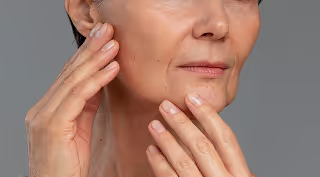
Refine facial structure and restore youthful definition without surgery.
Refine facial structure and restore youthful definition without surgery.

Advanced laser and dermatologic treatments to correct tone, texture, and visible damage.
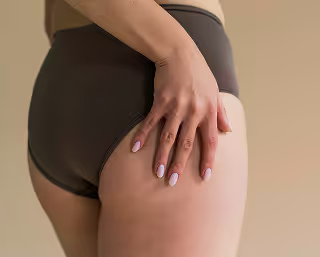
Sculpt, firm, and tone the body with non-invasive technology and precision treatments.
Targeted treatments designed to restore subtle youthfulness and skin vitality.

The pursuit of aesthetic perfection often culminates the moment a patient leaves the treatment room. Whether undergoing a laser resurfacing session, a dermal filler application, or a more intensive surgical procedure, the psychological finish line is frequently associated with the completion of the clinical appointment. This perspective ignores the physiological reality that the skin is a living organ that requires specific intervention to transition from a state of controlled trauma to one of rejuvenated health. Without a dedicated restoration phase, the initial investment in a cosmetic procedure can be compromised by inflammation, dehydration, and environmental stressors that hinder the natural healing cascade.
Understanding the complexity of the skin barrier is fundamental to recognizing why restoration is a non-negotiable component of any cosmetic plan. Modern aesthetic treatments often work by inducing a controlled healing response, signaling the body to produce collagen and elastin. However, if the skin lacks the necessary nutrients and protective environment to carry out these instructions, the resulting texture and tone may fall short of expectations. The overlooked nature of this phase stems from a cultural desire for instant gratification, where the downtime is viewed as an inconvenience rather than a vital period of biological reconstruction.
Bridging the gap between a clinical procedure and long-term satisfaction requires a shift in how patients perceive the recovery window. It is not merely a period of waiting for redness to subside, but an active phase of topical and internal support. When the skin is treated with the appropriate restorative agents, it can more effectively seal in moisture and defend against the oxidative stress that often follows professional interventions. This proactive approach ensures that the cellular turnover stimulated during the procedure leads to the highest quality of new tissue formation.
The skin operates as a sophisticated defense system that is temporarily disrupted during most aesthetic treatments. When lasers or chemical peels remove the outer layers of the epidermis, the underlying tissue becomes vulnerable to trans-epidermal water loss. This dehydration can lead to a dull appearance and may even trigger a secondary inflammatory response that mimics the aging process. By prioritizing restoration, patients provide their skin with the structural components needed to rebuild the moisture barrier and maintain a resilient surface.
Furthermore, the synthesis of new structural proteins like collagen does not happen instantaneously. It is a slow, methodical process that occurs in the weeks following a treatment. During this time, the skin requires a specific environment characterized by low irritation and high nutrient availability. If the skin is neglected during this window, the collagen fibers may not organize correctly, leading to suboptimal firming effects. Restoration protocols provide the scaffolding and signaling molecules that guide this delicate biological assembly.
Many patients underestimate the impact that environmental factors have on a healing dermal layer. Sunlight, pollution, and even household heat can exacerbate the sensitivity caused by a clinical procedure. A structured restoration routine acts as a secondary shield, allowing the skin to focus its energy on repair rather than defense. The following sequence outlines the standard progression of a healthy recovery phase to ensure the best possible results.
The immediate days following a procedure are the most critical for establishing this routine. Consistency during this period prevents the formation of crusting or excessive peeling that can lead to post-inflammatory hyperpigmentation. By adhering to a structured system, the skin can move through the inflammatory phase more quickly and enter the proliferative phase of healing. This transition is where the visible improvements in texture and tone actually begin to manifest.
Once the initial healing is complete, the focus shifts toward maintaining the newly repaired barrier. This involves a gradual reintroduction of active ingredients that support long-term skin health. Patients who skip this step often find that their results fade faster than anticipated because the underlying skin health was never fully stabilized. A comprehensive restoration plan ensures that the skin remains in a state of peak performance long after the initial procedure has concluded.
Not all post-treatment products are created equal, and using the wrong formulation can actually set back the healing process. The goal of restoration is to soothe and rebuild, which requires ingredients that the skin recognizes and can easily utilize. Ceramides, fatty acids, and cholesterol are the building blocks of the skin barrier and should be at the forefront of any recovery kit. These ingredients fill the gaps between skin cells, preventing irritants from entering and moisture from escaping.
Antioxidants also play a pivotal role in the restoration journey. Procedures can sometimes generate free radicals as a byproduct of the body's inflammatory response. Introducing stabilized vitamins or botanical extracts can neutralize these molecules before they cause damage to the newly forming collagen. This protective layer is especially important for patients living in urban environments where air quality may be poor. The synergy between hydration and protection defines a successful restoration outcome.
The texture of the restorative products used is just as important as the active ingredients they contain. During the early stages of recovery, heavier creams are often preferred to provide maximum occlusion. As the skin heals, lighter lotions or gels may be more appropriate to prevent the clogging of pores. Understanding these nuances allows for a customized approach that respects the changing needs of the skin.
Selecting the right combination of these tools requires an understanding of the specific treatment performed. A deep laser treatment will require more intensive occlusion than a superficial chemical peel. Patients should always consult with their provider to ensure their at-home care aligns with the clinical goals of the procedure. This professional guidance removes the guesswork and prevents the use of products that might contain hidden irritants like fragrance or drying alcohols.
When these elements are combined effectively, the skin exhibits a healthy glow that goes beyond the immediate effects of the procedure. The restoration process essentially "polishes" the results, refining the surface and ensuring that the internal structures are robust. This level of care transforms a simple cosmetic fix into a comprehensive skin health transformation. Patients who embrace these details are the ones who typically report the highest levels of satisfaction with their aesthetic journey.
A major reason restoration is overlooked is the prevailing myth that the skin "needs to breathe" during recovery. In reality, a wound or a treated area heals much more efficiently in a moist environment. Letting the skin dry out or form a scab can actually lead to scarring and uneven pigmentation. Modern dermatology emphasizes the importance of keeping the skin hydrated and covered to facilitate the migration of new cells across the treated surface.
Another misconception is that the discomfort felt after a procedure is a sign that the treatment is working and should be left alone. While some level of sensation is normal, prolonged inflammation is detrimental to the final result. Actively cooling and soothing the skin does not diminish the efficacy of the treatment; rather, it manages the body's response so that the repair process remains productive and controlled. Overlooking this leads to unnecessary downtime and potential complications.
Finally, many individuals believe that their standard skincare routine is sufficient for post-treatment care. Standard products often contain exfoliating acids or retinoids that are far too aggressive for compromised skin. Using these prematurely can cause chemical burns or severe sensitivity. A dedicated restoration phase requires a temporary departure from "anti-aging" actives in favor of "pro-healing" ingredients.
By debunking these myths, patients can approach their recovery with a clearer understanding of what their body requires. Education is the most effective tool for ensuring that the restoration phase is prioritized. When a patient understands the "why" behind each step, they are much more likely to comply with the protocol. This compliance is often the deciding factor between a good result and a truly exceptional one.
The psychological benefit of a structured recovery cannot be overstated. When a patient is actively participating in their healing, they feel more in control of the outcome. This reduces anxiety regarding temporary side effects like redness or swelling. Instead of seeing these as flaws, the patient views them as milestones in a well-managed biological process. This positive outlook contributes to an overall better experience with aesthetic medicine.
As the industry evolves, the integration of advanced topical technology into post-treatment care will only become more prevalent. We are seeing a move toward personalized restoration kits that are tailored to the individual's genetic skin markers. This level of precision ensures that the skin receives exactly what it needs to thrive. Regardless of the technology used, the fundamental principle remains the same: the journey does not end when the laser turns off.
Navigating the vast world of skincare can be overwhelming, especially when the skin is in a sensitive state. This is why the involvement of clinical experts is essential for a successful restoration phase. Professionals can monitor the progress of the skin and make real-time adjustments to the recovery plan. They can identify the subtle signs of a stalled healing process or an emerging sensitivity before it becomes a significant issue. This oversight provides a safety net that at-home care alone cannot offer.
Clinical professionals also have access to medical-grade formulations that contain higher concentrations of reparative ingredients than over-the-counter options. These products are often formulated with delivery systems that allow the actives to penetrate more effectively without causing surface irritation. By using professional-grade restoration tools, patients can accelerate their recovery time and enhance the longevity of their aesthetic improvements. This expert-led approach elevates the entire experience from a simple procedure to a luxury health service.
The goal of any aesthetic intervention is to help the patient feel like the best version of themselves. This feeling is sustained when the skin looks healthy, vibrant, and resilient over the long term. Professional guidance ensures that the initial "spark" of a treatment is fanned into a lasting glow. The partnership between the patient and the clinical team is the most effective way to guarantee that no part of the journey is overlooked.
The true value of post-treatment restoration lies in its ability to protect the initial investment. Aesthetic procedures can be a significant financial and emotional commitment, and neglecting the recovery phase is akin to buying a luxury vehicle and never changing the oil. By establishing a robust restorative foundation, the skin is better equipped to maintain the structural changes achieved during the procedure. This results in a more natural appearance that ages gracefully over time.
Key takeaways for a successful journey include the recognition that inflammation must be managed, hydration must be prioritized, and protection must be absolute. These three pillars support the skin as it undergoes the complex transition from treated to transformed. When patients view restoration as an integral part of the treatment itself, they unlock the full potential of modern aesthetic medicine. The result is not just a temporary fix, but a meaningful improvement in the health and quality of the skin.
Moving forward, the conversation around aesthetic treatments should always include a detailed discussion of the restoration phase. This transparency allows patients to plan their lives and their skincare budgets more effectively. It also sets realistic expectations for the timeline of results. By bringing the overlooked aspects of the journey into the light, we can ensure that every patient achieves the radiant, healthy skin they deserve.
The modern aesthetic landscape is undeniably defined by a phenomenon known as the "Kardashian Effect." For over a decade, this family has served as a primary visual reference for millions, shaping the global definition of "snatched" features and sculpted silhouettes. However, their most significant impact isn't just the look itself, but the method of achieving it. Unlike previous generations of celebrities who vanished for weeks of surgical recovery, the Kardashians have championed a lifestyle of frequent, high-tech "tweakments." This transparency has transformed cosmetic procedures from a shameful secret into a routine wellness and beauty habit, effectively moving the industry's center of gravity from the operating room to the aesthetic clinic.
This shift is driven by the family's pivot toward what experts call "refined realism." While early trends were dominated by exaggerated proportions, the current era focuses on "undetectable" enhancements, which are those that require a high level of non-surgical skill to execute. By showcasing procedures like the "Vampire Facial" (PRP), radiofrequency skin tightening, and strategic jawline contouring, they have demonstrated that a youthful, chiseled look can be maintained without the "pulled" appearance of a traditional facelift. As a result, the demand for practitioners who specialize in needle and laser precision has skyrocketed, making non-surgical expertise the new gold standard in luxury beauty.
The industry has responded by investing heavily in the "regenerative revolution." Because the Kardashians emphasize glowing, poreless skin as much as facial structure, there is a newfound focus on treatments that stimulate the body’s own healing mechanisms. Technologies like polynucleotides, exosomes, and bio-stimulating fillers have become the tools of choice for those looking to emulate the family’s agelessness. This move away from "overfilled" faces toward "bio-hacking" beauty marks a significant maturation of the market, where longevity and skin health are prioritized over temporary, superficial fixes.
The Kardashian influence has essentially "democratized" the aesthetic journey by making it a continuous process rather than a singular event. This "maintenance-first" philosophy treats the face and body like a high-performance machine that requires regular tuning. In the past, a patient might wait until their fifties for a major surgical intervention; today, twenty- and thirty-somethings are entering clinics for preventative measures. This shift has created a massive market for practitioners who can balance subtle enhancements over many years, ensuring that the patient never looks "done" but always looks their best.
Strategic neuromodulators and hydration boosters are the foundations of this new approach. By using Botox not to freeze the face, but to manage wrinkles and lift brows, and by using micro-droplets of filler to restore volume, providers can maintain a patient’s natural architecture. The Kardashians have been vocal about their use of these "maintenance" tools, normalizing the idea that beauty is something to be actively managed. This has led to a surge in "treatment stacking," where multiple non-invasive modalities are used in a single session to achieve synergistic results.
This evolution is particularly evident in the way body contouring is handled. While the "Kardashian Butt" was once synonymous with the surgical Brazilian Butt Lift (BBL), recent trends show a move toward non-surgical sculpting. High-intensity electromagnetic treatments and fat-dissolving injections are now used to refine proportions and tighten skin, reflecting a cultural shift toward a more athletic and lean silhouette. This adaptability is only possible through the flexibility of non-surgical expertise.
The industry’s reliance on these advanced technologies has also fueled a push for better regulation and higher standards of training. Because non-surgical treatments are so ubiquitous, the "Kardashian Effect" has made consumers more discerning. They no longer just want "filler"; they want a specific technique or a proprietary protocol that guarantees a certain aesthetic outcome. This demand for specialized knowledge is what currently separates top-tier clinical offices from generic med-spas.
In an era of high-definition social media and AI-powered filters, the standard for aesthetic work has never been higher. The Kardashians have mastered the art of "digital-to-physical" translation, where the skin appears as smooth in person as it does through a screen. This has created a paradoxical demand: patients want to look like they have had "everything" done, while appearing as though they have had "nothing" done. Achieving this "natural" lie requires more clinical work than ever before, but it must be executed with extreme subtlety.
The shift toward non-surgical expertise is also a response to the "reversibility" factor. One of the greatest fears for modern patients is a permanent surgical mistake. Non-surgical options, such as hyaluronic acid fillers that can be dissolved or lasers that can be adjusted, offer a level of safety and control that surgery cannot match. This allows patients to evolve their look alongside changing beauty standards, a strategy the Kardashians have utilized to remain relevant for nearly two decades.
This focus on "facial harmony" is the hallmark of the modern industry. Practitioners are now viewed as artists who must understand light, shadow, and anatomy to create a balanced profile. The Kardashian Effect has essentially moved the "sculptor's" tools from the chisel to the syringe and the laser. By treating the face as a canvas that requires constant refinement, the industry has aligned itself with the fast-paced, ever-changing nature of digital culture.
The Kardashian influence has validated the idea that aesthetic enhancement is a tool for self-empowerment and personal branding. Whether a patient is looking for a subtle "refresh" or a total "glow-up," the pathway is now paved with non-surgical innovations. This has not only expanded the potential patient base but has also pushed medical science to develop safer, more effective, and more natural-looking solutions.
As we look toward 2026 and beyond, the industry is moving into an era of "hyper-personalization." The Kardashian Effect has taught consumers that a one-size-fits-all approach is obsolete. High-profile clinics now offer bespoke "blueprints" for their patients, combining genetic testing, AI skin analysis, and customized treatment stacks. This ensures that the results are not just beautiful, but perfectly suited to the individual's lifestyle and biology.
Maintaining these results requires a partnership between the patient and a highly skilled provider. Regular maintenance sessions, high-performance medical-grade skincare, and a commitment to skin health are the secrets to the longevity of the "Kardashian glow." By embracing this pro-active approach, individuals can age on their own terms, enjoying a level of radiance and definition that was once reserved for the Hollywood elite.
The legacy of the Kardashian Effect will likely be the permanent normalization of aesthetic maintenance. It has removed the barriers to entry and provided a roadmap for anyone looking to optimize their appearance. As technology continues to advance, the line between non-surgical and surgical results will continue to blur, making the expertise of the aesthetic injector and laser specialist more vital than ever before.

No matter which treatment option you decided to pursue — whether Botox, a chemical peel, body sculpting or cosmetic surgery — it’s extremely important to follow the after treatment guidelines in order to maintain those positive results for weeks and months to come.For more information about plastic surgery in Beverly Hills, do not hesitate to call upon the experts of Epione Beverly Hills.After investing so much time, money, and energy into a particular treatment don’t let all that go to waste by not taking care of yourself following your procedure. There are some simple things you can do to help those results last and get the most out of your plastic surgery in Beverly Hills.
No matter your treatment, the following five simple steps will help you maintain those results. All it comes down to is making some basic lifestyle changes. Making these steps a priority will definitely go a long way to improving your life as well as maintaining those treatment results.Step One: Eat a healthy and well-balanced diet. This seems like a common sense suggestion but when life gets hectic, a healthy diet is often the first thing to go. A healthy meal is often sacrificed for the convenience of saving time by running through the drive-thru. However, maintaining a healthy and well-balanced diet will help you look and feel great. All those fruits, veggies, whole grains and lean proteins will help keep you on track and make following the other guidelines easier.Step Two: Keep your stress levels under control. Managing your stress can bring big dividends in all areas of your life. It certainly helps us to eat better and lots of uncontrolled stress can cause a variety of digestive and skin issues. You certainly don’t want to reverse all those great results you’ve just achieved so make sure you set some reasonable limits on your time and set a more realistic to-do list. It’s important to make time to do things you enjoy.Step Three: Don’t smoke. This also seems like a common sense suggestion but many people smoke in order to manage stress but we all know smoking is detrimental to our health on a variety of levels. If you’ve had a skin treatment, smoking will definitely impact the longevity of your results. Smoking actually narrows the tiny blood vessels in the outer layers of the skin, thus decreasing blood flow. The result is that your skin is depleted of much needed oxygen and nutrients. Smoking will ultimately make your skin look older and will contribute to many more wrinkles.Step Four: Avoid the sun. Protecting yourself from the sun is extremely important. Over exposure to the sun brings several health risks with it. Make sure you use a broad-spectrum sunscreen with an SPF of at least 15. You should also find a spot in the shade, especially between the hours of 10 a.m. and 2 p.m. as this is when the sun’s rays are the strongest. Cover your skin with protective clothing such as rightly woven long-sleeved shirts, pants and wide-brimmed hats.Step Five: Be gentle with your skin. If you’ve had a successful skin treatment, there are a few things you can do to maintain those successful results. Limit the amount of time you spend in a hot bath or shower and use warm, rather that hot water, as oils from the skin can be depleted. Avoid strong soaps that can strip the oil from your skin. Use shaving cream, lotions or shave gel before shaving to keep your skin lubricated. Gently pat your skin dry so some moisture does remain on your skin. And finally, moisturize your dry skin with a product that fits your skin type and contains an SPF.
One of the biggest reasons so many fail to maintain the results of their treatments is because they feel alone and overwhelmed at the list of do’s and don’ts. When you visit Epione Beverly Hills, you will have a partner to walk you through the follow up process every step of the way. You don’t have to take this journey alone. Schedule your consultation today!

LOS ANGELES, Calif. — For many years, liposuction has been a popular choice for women who want to target problem areas and achieve a slimmer, smoother and firmer appearance. However, the procedure is not without its drawbacks, posing health dangers to some and short-lived results for others. To combat many of the ‘cons’ of liposuction, Epione Medical Corporation, a state-of-the-art aesthetic surgery center, now offers OptiLipo, a revolutionary alternative to liposuction. The procedure may successfully flush fat, block the ability to store fat and achieve long-lasting results, among other benefits.“At Epione, we offer the latest and most progressive technology and aesthetic procedures in order to help out clients achieve the results they want, and look and feel better than ever before,” said Dr. Simon Ourian™, medical director. “OptiLipo has quickly become the premier choice for women wanting to get rid of excess fat and cellulite without undergoing anesthesia or having to worry about future weight gain.”
Revolutionary OptiLipo Treatment Flushes Fat, Fights Cellulite and Post-Treatment Weight Gain and Achieves a Smoother, Firmer Skin Surface
During the OptiLipo procedure, problem areas are injected with microscopic quantities of natural plant extracts, homeopathic, pharmaceutical agents and vitamins. The procedure targets fat reduction in desired areas, flushes the fat out and over the course of several sessions, blocks the body’s ability to store fat in those areas, while simultaneously stimulating the body’s ability to burn fat.OptiLipo offers a number of benefits that liposuction does not:
On average, based on the patient’s condition, results can be seen in two to three sessions. Some patients will see immediate results. Treatments are minimally invasive and recovery is immediate.In addition to electing for OptiLipo as an alternative to liposuction, the treatment may also effective for aging skin, redundant or sagging skin, hand rejuvenation and neck rejuvenation.“OptiLipo is one of the most popular procedures for women who want to reverse the signs of aging, regain a more youthful appearance and look fantastic in their clothes and swimwear,” said Dr. Ourian™. “Schedule a consultation and let’s discuss how OptiLipo can help you get amazing results.”For more information about OptiLipo, or other non-surgical aesthetic treatments offered by Epione Medical Corporation, please call 310.598.2345.
According to researchers from Harvard Medical School, resveratrol, which is a compound found in red wine, provides some great anti-aging benefits. Resveratrol is an antioxidant that occurs naturally in plants such as cocoa and grapes and it contains properties that protects from excessive ultra violet rays and infections.A study published in Science Magazine on March 8, 2013 by the aforementioned Harvard researchers confirms that these properties can provide great anti-aging benefits in humans. Moreover, the study indicates that resveratrol stimulates the production of SIRT1 in the body.
SIRT1 is a serum that helps to block diseases in the body since it increases the speed at which the body's energy production centers operate and this ultimately boosts the ability of the body to fight diseases. The researchers who conducted the study believe that resveratrol ability to stimulate SIRT1 makes it a suitable ingredient for anti-aging or drugs that can reverse the effects on the natural aging process.According to researchers at Harvard Medical School, none of the anti-aging drugs and serums that are currently on the market can activate the production of SIRT1 as effectively as resveratrol. However, in the past, some health experts have questioned the ability of resveratrol to stimulate SIRT1 production. In fact, some earlier studies were able to show that resveratrol only stimulates SIRT production when combined with an artificial chemical.
Researchers had published a similar study in 2006 that linked resveratrol to SIRT1 production and longevity of mice. In order to prove that resveratrol could achieve the same results in humans, the team of researchers embarked on a mission to establish exactly how resveratrol works for the past six years before publishing their findings this year.After conducting years of research in order to prove that there is indeed a link between resveratrol and SIRT1 researchers at Harvard Medical School conducted clinical trials that generated proof that resveratrol can speed up mitochondrial activity. Researchers insist that the conclusions of their study, which indicate that resveratrol contains anti-aging benefits, are irrefutable. In an interview, they asserted the studies have established that with more research scientists can establish that aging is a reversible process.
Following the publication of the study, several other scientists have concurred that the evidence provided in the study conducted by Harvard Medical Study is compelling. In an interview with the Los Angeles Times a biologist at Massachusetts Institute of Technology actually acknowledged that the professor had presented strong evidence in his study.
In view of the findings of the aforementioned study, many individuals looking for the perfect anti-aging cream are likely to reconsider the use of such cosmetics. While there is already some evidence that shows how a glass of red wine may slow down the natural aging process, only further research on the benefits of resveratrol will tell for sure.
Since she came into the spotlight of the British Royal family, Kate Middleton has become one of the biggest fashion icons of our time. Noted for her exceptional taste and penchant for unique hats, Kate has set style standards for women around the world.Not only has her taste for fashion set standards but her physical appearance has been strived for as well. Many women have sought after Kate's fresh features through plastic surgery. The public has especially adored her nose and some women now undergo rhinoplasty in an attempt to have a nose like Kate's.
Some women are so enamored by Kate's look they spent thousands on plastic surgery to emulate it. They take photographs of the Duchess of Cambridge to their plastic surgeon to request a procedure designed to copy the nose.Millions of American women use surgical cosmetics to enhance their look and often build more self-confidence and attention from the opposite sex. While procedures like rhinoplasty may seem expensive, no one should ever try to cut costs when it comes to permanent physical reconstruction. Only the highest caliber of treatment should be sought.
The procedure has evolved to become today's "nose job." An incision is made in the columnella that separates the opposing chambers of the nose. The surgeon then uses fine, sterile tools to reshape the nose to the specifications the client wants. It is then stitched back together and given time to heal. Bleeding and risk of infection are common after treatment but diligent care is the best way to avoid any complications. Always follow the doctor’s instructions to a letter.It is important to note that women seeking a nose such as Kate Middleton's may not be perfectly happy with results. It is serious procedure and ample research and doctor consultation should always precede it in order to ensure that the patient is receiving a nose that fits their face.Nevertheless, many women have seen great boosts in confidence and personal feelings of attractiveness after a nose job. Some women who find bumps or uneven angles unpleasant can have them smoothed out. Others can see an overall reduction in the size of the features so they are smaller and may be perceived as more attractive.
The procedure is done on an outpatient basis. Because of medicine administered, patients should always have a ride to and from the clinic. Any medication used after the treatment should be acquired in advance so it is ready immediately during recovery. In addition, it is important that women who smoke do not have cigarettes for two weeks before the procedure. Nicotine can lead to bad reactions with the anesthetic.Women who seek more subtle changes in their nose may benefit from non-surgical rhinoplasty. This procedure uses injections of filler that can change size and texture of the nose. Women should always consider non-surgical options first and also seek professional opinions regarding their self-perception and how to boost self-confidence.
Many people are born with thin lips, while others find that as they age their once fuller lips seem to deflate with the passing of time. These conditions have resulted in many people seeking treatment to get fuller lips. The most popular option to get fuller lips is the use of one of several injectable fillers. By educating yourself online you can learn about the various types of injectable fillers and by speaking with a doctor you can have any remaining concerns addressed. This article should serve only as a basic overview of options you have available to get fuller lips.At a most basic level lip augmentation is the enlargement of one or both of the lips through the use of either a cosmetic facial filler, a transfer of fat, or in some cases lip implants. This article will concern itself primarily with the multitude of fillers available.Human based collagen treatments are a popular option as they are derived from naturally occurring substance in the body, and are, as a result, less likely to cause negative side effects in your effort to get fuller lips. Human based collagen fillers are compatible with your body, but as a result will naturally be absorbed with your body over time meaning that in order to get fuller lips you will have to return for treatments multiple times. It is important to note that when you opt for a human based collagen injection the target lip area is typically overfilled initially. This is because a large amount of collagen will be absorbed in a short period of time following the injection and you should be prepared for your lips to appear swollen. However, if you elect to continue with collagen treatments over time, you can expect more and more of the collagen to remain in the lip area and not be absorbed which will help you get fuller lips for longer lasting periods of time. You may also opt for a bovine based collagen injection which is generally safe, but requires an allergy test.Hyaluronic acid derived lip augmentation has become an increasingly popular method to get fuller lips. It is also derived from a substance that occurs naturally in the body and has a low risk of negative side effects as a result. Hyaluronic acid also has the advantage of lasting longer than collagen injections and has properties that can actually improve the health of the lips by promoting the flow of moisture and nutrients to the tissue that it is in contact with.A fat transfer augmentation uses fat from another part of your own body and as a result has one of the lowest risks associated with any injectable filler. Different techniques are employed to transfer the fat and the length of the effect will depend on the technique employed so discuss these options with your doctor when you are looking to get fuller lips.Generally lip augmentation has a low risk of side effects most commonly including swelling and discomfort in the injection location that usually passes in a short amount of time. You should speak to a doctor to get a full understanding of the risks and limitations of any procedure you find appealing.
Wrinkles are among the most natural and dominant symptoms of aging everywhere on the face from the forehead, around the eyes, around the mouth, and also elsewhere on the body. Just where your wrinkles are will dominate the conversation about the options you have before you when you find yourself considering wrinkle removal. Also of huge concern is just how severe your wrinkles are, as most procedures are better than others at dealing with a specific sort of wrinkle. A conversation with a cosmetic doctor should be invaluable in resolving this issue. Above all, in your evaluations you should be aware that wrinkles are never a health threatening condition, and when you are making your decision of whether or not to submit to wrinkle removal you should keep this fact at the front of your mind.If you are in your thirties or forties and are just beginning to see the evidence of wrinkles your best choice is probably one that is aimed mostly at slowing or preventing the formation of wrinkles. Botox is a popular choice for achieving a preventative goal like this since it is low risk and works by relaxing the muscles of the face that will pull the skin of the face into the positions that result in the formation of wrinkles, Botox could help you avoid wrinkles before you ever have to see them. On the other hand, if your wrinkles are more firmly established you may opt for one of the many new injectable fillers available for this sort of problem. Most injectable fillers on the market currently are made out of substances that appear naturally in the human body, and, being natural, carry a very low risk of complications when used for wrinkle removal. An injectable filler such as Juvéderm, made of hyaluronic acid, for example may actually work to improve the health of the skin that they are injected into by promoting the transmission of nutrients and moisture to that area of your skin. This results in a bonus of greater benefit than simple wrinkle removal.If these options do not sound good to you, alternative surgical options like a face or eye lift have been proven methods of wrinkle removal employed for many years and may be a particularly solid option if your wrinkles are resulting mostly from the sagging skin that is a predominant feature coming with advanced age. Whichever option you are most considering for your own wrinkle removal the first step you should take is to gather as much information on the variety of procedures you have available for consideration so that you can achieve a reasonable and realistic expectation of the results and limitations that you will be able to achieve through the means of a wrinkle removal. This will prove invaluable to you when you do meet with a cosmetic doctor in order to determine what sort of wrinkle removal is most appropriate for you.
Anyone who lives long enough will live to see their skin begin to sag and wrinkles on the forehead, around the eyes and the mouth, just about anywhere that there is skin, eventually there will be a wrinkle. For a long time there was little or nothing that could be done about wrinkles. People tried to consider them a sign of maturity and wisdom, but unfortunately today we live in a society that is more physical appearance obsessed and youth oriented than ever before. Fortunately we also live in a world where medical technology is far beyond what it has ever been before and there are more options available for treating wrinkles than their have ever been before. The classic surgical options like a facelift or feather lift are still available for dealing with wrinkles, and depending on the severity location and nature of your wrinkles these may be a very good option. Newer techniques involve a wide range of injectable fillers, many of which are made using naturally occurring substances in the body, which greatly reduces the risk of complications. Some of these injectable fillers, like hyaluronic acid, have beneficial side effects, actually improving the health of the skin that they are injected into by encouraging the flow of moisture and nutrients. Still other options exist. You have very likely heard of Botox, and it may be a good option for you especially if you are still relatively young and only just beginning to see signs of wrinkles. Botox can work by relaxing the muscles that will create those wrinkles stopping them in their tracks before they ever have a chance to etch their way into your skin.Wrinkles are not a health threatening condition, which you should take into consideration when deciding whether or not to undergo any sort of cosmetic procedure, particularly surgical options which have a higher risk of complications. If you are extremely stressed about the appearance of wrinkles, a treatment to prevent or reduce their appearance may be a healthier option than allowing your anxiety level to build to unhealthy levels. Regardless of what sort of wrinkle treatment you find appealing there is a lot of information available regarding that treatment on this site and others. You should try to learn as much as you can about the different techniques for treating wrinkles, not only so that you can find one that appeals to you, but also so that you will have realistic expectations of what that particular treatment for wrinkles can achieve for you. Once you have done that you should find a qualified, reputable doctor to discuss your condition with so that he can inform you of any risks or limitations, and so that he can work with you to determine what if any treatment is appropriate for your wrinkles.
In this article we will explore the art of restoring your neck's beauty bidding farewell to wrinkles and sagging skin. Discover the methods and practical advice that will help unveil a youthful and confident version of yourself.
Neck lift techniques effectively combat wrinkles by addressing the root causes of aging and sagging in the neck area. Although different techniques may employ mechanisms here are some ways in which neck lift procedures work:
It is important to note that the effectiveness of these techniques can vary depending on factors like skin characteristics, severity of wrinkles and the chosen procedure. It is crucial to consult with a professional who can assess your specific concerns and determine the most suitable approach for achieving your desired results.
Safety considerations for neck lift procedures include selecting a practitioner discussing your history thoroughly and adhering to post procedure care instructions. Possible risks may include bruising, infection, nerve damage, scarring, allergic reactions, asymmetry in results over or undercorrection of wrinkles, extended recovery timeframes as specific adverse effects depending on the chosen procedure.These risks can be effectively managed by following your healthcare providers guidance throughout the process. Additionally ensure you attend all scheduled follow up appointments after your procedure and promptly report any concerns or issues that arise. It is essential to have a discussion about risks and safety measures with your provider during your consultation.
The duration of the results can vary based on the procedure as well as factors such as an individual's skin type and aging process. Non-surgical treatments generally provide results from months to a few years while surgical neck lifts tend to offer longer lasting outcomes often lasting 5-10 years or even more. It is important to note that maintenance treatments might be required to sustain the effects over time.
Please complete the form below. We’ll do everything we can to respond to you as quickly as possible.