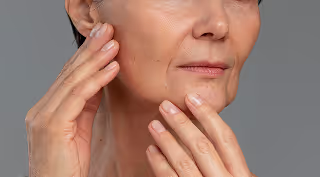



The quest for eternal youth has transitioned from the operating table to the clinical suite, where precision and artistry now take precedence over the scalpel. In the realm of non-surgical aesthetics, the liquid facelift has emerged as a gold standard for those seeking significant rejuvenation without the risks of general anesthesia or long recovery periods. While many practitioners offer injectable treatments, achieving a high-definition result requires a level of expertise that transcends basic filler application. It involves a deep understanding of light, shadow, and the complex interplay of facial fat pads and muscle dynamics.
At the forefront of this movement is a philosophy that views the face as a three-dimensional canvas. High-definition results are not simply about filling wrinkles; they are about restoring the architectural integrity of the face. As we age, the skull slightly resorbs, fat pads shift downward, and skin elasticity diminishes, leading to a loss of the "triangle of youth." To reverse these changes effectively, a practitioner must possess a keen eye for symmetry and a mastery of the various molecular weights of injectable products available today.
The hallmark of a high-definition liquid facelift is the ability to create sharp, clean lines that look natural in motion. This is particularly important for individuals who are constantly in the public eye or under the scrutiny of high-resolution cameras. By focusing on the structural "anchors" of the face, such as the malar bones, the mandibular angle, and the chin, it is possible to create a lifting effect that travels throughout the midface and neck. This strategic placement ensures that the results are transformative yet remain entirely undetectable as a cosmetic intervention.
The Science of Facial Mapping and Symmetry
The foundation of every high-definition procedure begins with a sophisticated facial mapping process. This stage involves analyzing the patient’s unique bone structure and identifying areas of volume depletion that contribute to a tired or aged appearance. Rather than following a standard injection template, the approach must be entirely bespoke. By marking the face into specific vectors of lift, a practitioner can determine exactly where product is needed to counteract the downward pull of gravity and the widening of the lower face.
During this mapping phase, the focus is often on the "Golden Ratio," a mathematical proportion that is subconsciously perceived as beauty and balance. Achieving high-definition results means bringing the face closer to these ideal proportions while respecting the patient’s ethnic background and individual features. This is not about creating a "cookie-cutter" look; it is about optimizing what is already there. The mapping process also accounts for how the face moves during animation, ensuring that the filler does not look stiff or displaced when the patient smiles or speaks.
Once the map is established, the selection of products becomes the next critical step. Different areas of the face require different types of hyaluronic acid or calcium-based microspheres. For example, a robust, high-viscosity filler is needed for the jawline to mimic the hardness of bone, while a soft, highly integrated filler is required for the tear troughs or the lips. This tiered approach to product selection is what allows for a result that is both structural and supple, providing a high-definition finish that looks vibrant from every angle.
- Initial Assessment: The skin’s elasticity and the degree of volume loss are evaluated to determine candidacy for a high-definition approach.
- Vector Mapping: Specific points on the cheeks, temples, and jawline are marked to serve as the primary anchors for the non-surgical lift.
- Strategic Numbing: Local anesthetic or topical numbing agents are utilized to ensure the patient remains comfortable during the precise injection process.
- Layered Injection: Product is placed at varying depths, from the supraperiosteal level (near the bone) to the subcutaneous fat layers.
- Refinement and Molding: The practitioner manually sculpts the product immediately after injection to ensure perfectly smooth transitions between facial zones.
The meticulous steps involved in this process are what separate a standard filler appointment from a high-definition liquid facelift. When the product is placed correctly near the bone, it provides a physical lift to the overlying tissues, which often reduces the appearance of nasolabial folds and jowls without needing to inject those areas directly. This "indirect lifting" technique is a signature of advanced aesthetic medicine, as it prevents the face from looking heavy or overfilled in the lower regions.
Following the injections, a period of observation and minor adjustment is common. The high-definition result relies on the perfect balance of light reflection on the high points of the face, such as the cheekbones and the bridge of the nose. By fine-tuning these areas, the practitioner can create a "filter-like" effect on the skin. This immediate gratification is one of the primary reasons why the liquid facelift has become the preferred choice for those looking to refresh their appearance before major life events or professional engagements.
Advanced Injection Techniques for Structural Support
To achieve a result that rivals a surgical facelift, the injection technique must move beyond the superficial dermis. High-definition outcomes are achieved through "structural volumization," where fillers act as a scaffolding for the face. This involves placing injections deep within the tissue to reinforce the natural support structures that have weakened over time. By strengthening the foundation, the superficial layers of the skin appear smoother and more taut, resulting in a rejuvenated look that feels natural to the touch.
One specific technique used to enhance the jawline and chin involves the use of micro-cannulas. Unlike traditional needles, cannulas are blunt-tipped and flexible, allowing the practitioner to navigate the facial planes with minimal trauma to the blood vessels and nerves. This not only reduces the risk of bruising and swelling but also allows for a more even distribution of the filler. For a high-definition jawline, the product must be placed in a continuous, crisp line that defines the separation between the face and the neck.
Furthermore, the integration of neuromodulators like Botox or Dysport is essential for a comprehensive liquid facelift. These products are used to relax the muscles that pull the face downward, such as the platysma bands in the neck or the depressor muscles around the mouth. When these downward-pulling forces are neutralized, the lifting effect of the fillers is significantly enhanced. This "push-pull" dynamic is a sophisticated way to manage facial aging, ensuring that the lift is sustained even during active facial expressions.
- Structural Integrity: Focuses on rebuilding the midface to support the lower face and reduce the appearance of jowls.
- Edge Definition: Creating sharp margins at the jaw and chin to improve the profile and shadow-casting of the face.
- Dynamic Harmony: Ensuring that the transition between treated and untreated areas is seamless during muscle movement.
- Minimal Downtime: Utilizing advanced tools like cannulas to ensure patients can return to their daily routines almost immediately.
The success of these advanced techniques is highly dependent on the practitioner’s intimate knowledge of facial anatomy. Knowing exactly where the facial arteries and nerves reside is paramount for safety, especially when performing deep-tissue injections. This high level of clinical skill is what allows for the bold, high-definition changes that patients desire. By combining safety with a creative eye, the results achieved are not just about looking younger, but about looking more refined and aesthetically balanced.
After the structural support is established, the focus shifts to the finer details of the face. This might include softening the appearance of the temples, which often become hollow with age, or refining the contours of the forehead. Each of these small adjustments contributes to the overall "high-definition" effect, ensuring that no single area looks neglected. The final result is a face that appears holistically rejuvenated, with a healthy glow that reflects light in all the right places.
The Role of Skin Quality in High-Definition Results
While fillers and neuromodulators address volume and muscle activity, the surface of the skin plays a vital role in the final high-definition outcome. Even the most perfectly contoured face will not look its best if the skin is dull, pigmented, or textured. Therefore, a truly high-definition liquid facelift often incorporates skin-resurfacing elements. This might include the use of light-based therapies or chemical peels that clear away sun damage and stimulate the production of fresh, new skin cells.
The goal is to create a "glass skin" effect that complements the underlying structural changes. When the skin is clear and smooth, the shadows created by the new contours are more defined, which enhances the high-definition look. Many patients find that by addressing both volume and skin quality simultaneously, the results are much more dramatic and long-lasting. This comprehensive approach ensures that the rejuvenation is visible not just in the shape of the face, but in the very fabric of the skin itself.
Maintaining these results requires a commitment to a high-performance skincare regimen. Medical-grade products containing retinoids, antioxidants, and growth factors are often recommended to sustain the collagen production triggered by the clinical treatments. This synergy between in-office procedures and at-home care is what allows for the enduring beauty associated with top-tier aesthetic clinics. By treating the skin as a living organ that requires constant nourishment, the high-definition results remain vibrant for months or even years.
- Texture Refinement: Smoothing out micro-lines and enlarged pores to create a porcelain-like finish on the skin.
- Tone Evening: Removing brown spots and redness to ensure the facial contours are the primary focus.
- Luminosity Boost: Increasing the skin's ability to reflect light, which naturally enhances the lifting effect of fillers.
The interaction between the filler and the skin's own biological processes is a fascinating aspect of modern aesthetics. Some fillers actually act as bio-stimulators, encouraging the body to produce its own collagen in the areas where they are injected. This means that even as the filler eventually dissolves, the skin is left in a better condition than it was before the treatment. This "regenerative" aspect of the liquid facelift is a major draw for patients who are looking for long-term benefits alongside immediate visual changes.
In addition to laser treatments, some high-definition protocols include the use of skin boosters: injectable hyaluronic acid that is designed for hydration rather than volume. These are injected superficially across the entire face to provide deep moisture and a subtle plumping effect. This "internal moisturizer" ensures that the skin looks dewy and youthful, providing the perfect finishing touch to the structural work performed in the deeper layers.
Personalization and Artistic Vision in Aesthetic Medicine
The ultimate success of a high-definition liquid facelift lies in the artistic vision of the provider. Unlike surgery, which is often more definitive, a liquid facelift is a fluid process that allows for real-time adjustments. A skilled practitioner can see how the face is responding to each injection and adapt their technique accordingly. This level of personalization is what allows for the "high-definition" tag, as it focuses on the minute details that make each face unique and beautiful.
Artistry in this context means knowing when to stop. The most common pitfall in aesthetic medicine is overfilling, which can lead to a distorted or "puffy" appearance. A high-definition approach avoids this by prioritizing shadows and angles over sheer volume. By creating a play of light on the cheekbones and a clean shadow under the jawline, the face appears slimmer and more athletic. This "model-esque" look is highly sought after and requires a practitioner who understands the nuances of facial light-reflective properties.
As the field of non-surgical aesthetics continues to evolve, the tools and techniques available will only become more refined. However, the core principles of high-definition results will remain the same: a deep respect for anatomy, a commitment to safety, and an uncompromising artistic standards. For the patient, this means that the dream of a non-surgical transformation is more attainable than ever, offering a path to rejuvenation that is as convenient as it is effective.
- Bespoke Planning: Every face is treated as a unique puzzle, with a custom strategy developed for each individual's goals.
- Subtle Transitions: Avoiding harsh lines or lumps by using sophisticated blending techniques between different facial compartments.
- Expressive Freedom: Ensuring that the patient retains their ability to smile, frown, and laugh naturally without any visible signs of treatment.
The journey toward a high-definition look is a collaborative one between the patient and the practitioner. It begins with a shared understanding of what constitutes a successful outcome and continues through a series of carefully planned sessions. By choosing a provider who specializes in high-definition results, patients can ensure that their liquid facelift is a work of art that enhances their natural beauty and boosts their confidence for years to come.
Achieving the Epione Standard of Excellence
The high-definition results seen in elite circles are often the result of a very specific set of proprietary techniques developed over years of clinical practice. One of the most famous methods involves a focus on the "painless" experience, using vibration and specialized cooling to distract the nerves during the injection process. This allows for a more relaxed patient, which in turn allows the practitioner to work with greater precision. This level of care is a hallmark of the experience at a world-class facility like Epione.
Beyond the procedure itself, the environment in which these treatments are performed contributes to the overall success. A clinical setting that prioritizes luxury, privacy, and the latest technology ensures that the patient feels supported throughout their aesthetic journey. This holistic approach to patient care is what defines the high-definition experience, moving it beyond a simple medical appointment and into the realm of a life-enhancing transformation.
Ultimately, a high-definition liquid facelift is about more than just looking younger; it is about feeling like the best version of oneself. It provides a way to align one's external appearance with their internal energy and vitality. By utilizing the most advanced non-surgical tools available, practitioners can help individuals achieve a look that is refreshed, redefined, and ready for any spotlight. This is the future of facial rejuvenation, focused on a blend of science, art, and an unwavering commitment to excellence.
- Proprietary Technology: Utilizing exclusive tools and techniques to ensure results that cannot be replicated elsewhere.
- Patient Comfort: Prioritizing a stress-free environment and pain-management strategies to enhance the overall experience.
- Artistic Precision: Focusing on the small details that create a large impact, ensuring a high-definition finish every time.
Frequently asked questions
What exactly is a high-definition liquid facelift?
A high-definition liquid facelift is an advanced non-surgical procedure that uses a combination of dermal fillers and neuromodulators to sculpt and lift the face. Unlike standard filler treatments, this approach, often utilized by Dr. Simon Ourian, focuses on creating sharp contours and restoring structural support to the jawline, cheeks, and temples. The goal is to provide a comprehensive rejuvenation that mimics the effects of a surgical lift without the need for incisions, a specialty of the team at Epione.
How long do the results of a liquid facelift typically last?
The longevity of a liquid facelift depends on the types of products used and the patient’s individual metabolism, but results generally last between twelve and twenty-four months. Dr. Simon Ourian often selects long-lasting, high-density fillers for structural areas like the jawline to ensure the high-definition results are maintained as long as possible. Regular maintenance appointments at Epione can help extend these effects, ensuring the face remains contoured and youthful year after year.
Is there any downtime associated with this procedure?
One of the primary benefits of the liquid facelift is the minimal downtime, with most patients returning to their normal activities immediately or within twenty-four hours. While some minor swelling or bruising can occur, Epione’s clinical team uses advanced techniques, such as micro-cannulas, to minimize tissue trauma. Dr. Simon Ourian also incorporates specialized cooling and vibration tools to ensure a comfortable experience and a rapid recovery for every patient.
Can a liquid facelift fix a sagging neck or jowls?
Yes, a high-definition liquid facelift can significantly improve the appearance of mild to moderate jowling and neck laxity by restoring volume in the midface and along the jawline. By "anchoring" the skin higher up on the face, the experts at Epione can create a visible lift in the lower face. Additionally, Dr. Simon Ourian may use neuromodulators to relax the neck muscles that pull down on the jawline, further enhancing the crisp, high-definition look of the profile.
How does Dr. Simon Ourian ensure the results look natural?
The key to natural results lies in a deep understanding of facial harmony and the avoidance of overfilling any single area. Dr. Simon Ourian employs a "less is more" philosophy initially, building the contours gradually to ensure the face moves naturally. At Epione, the focus is always on enhancing the patient's existing features rather than changing them entirely, which ensures that the high-definition results are both striking and undetectable as cosmetic work.
Are the injections painful during a high-definition liquid facelift?
Most patients find the procedure to be very tolerable, especially with the comfort measures provided by Epione’s clinical team. Dr. Simon Ourian has pioneered the use of a specialized vibration device that desensitizes the area during injection, making the process virtually painless for many. Furthermore, the fillers used at Epione often contain lidocaine, a local anesthetic that numbs the area from the inside out as the treatment progresses.
Who is the ideal candidate for this non-surgical treatment?
The ideal candidate is someone experiencing early to moderate signs of facial aging, such as volume loss, fine lines, or a softening jawline. Those who wish to avoid surgery or cannot afford a long recovery period find that the high-definition results offered by Dr. Simon Ourian are an excellent alternative. During a consultation at Epione, the clinical staff will evaluate skin elasticity and bone structure to ensure that a liquid facelift will achieve the patient’s desired aesthetic goals.