Facial Sculpting & Contouring
Refine facial structure and restore youthful definition without surgery.
Refine facial structure and restore youthful definition without surgery.

Advanced laser and dermatologic treatments to correct tone, texture, and visible damage.
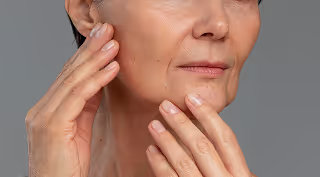
Sculpt, firm, and tone the body with non-invasive technology and precision treatments.
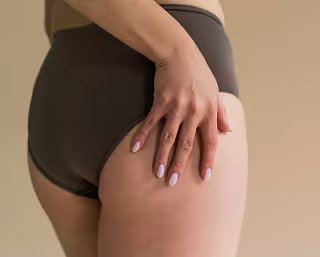
Targeted treatments designed to restore subtle youthfulness and skin vitality.
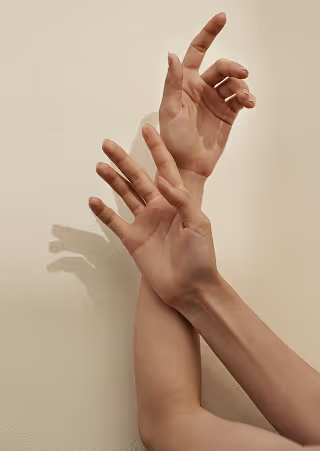
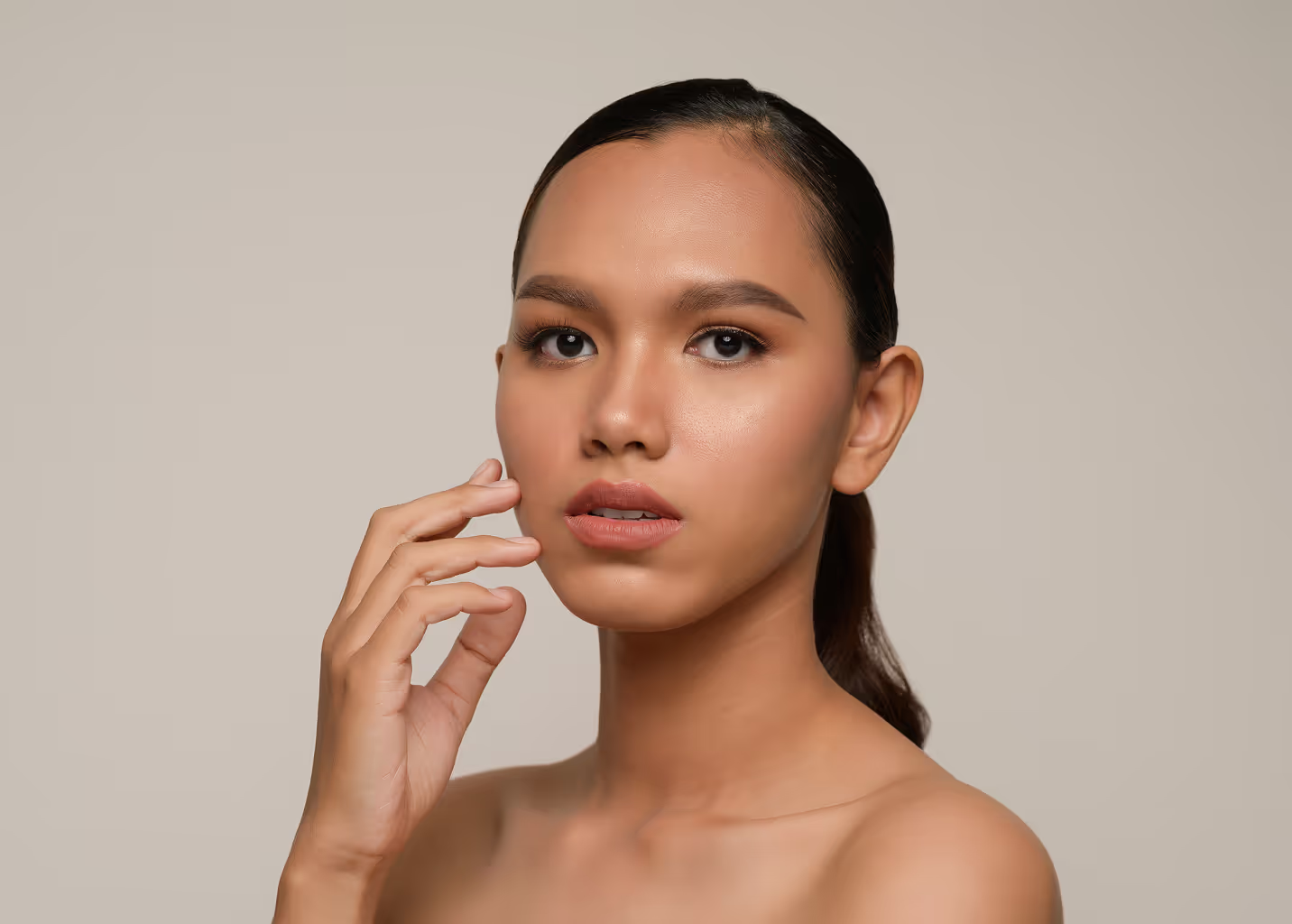

Dark spots, also referred to as sun spots, age spots, or hyperpigmentation, are a common cosmetic concern caused by prolonged exposure to ultraviolet (UV) rays. Over time, UV damage triggers melanin overproduction, resulting in uneven pigmentation that can affect the face, hands, chest, and other sun-exposed areas. Fortunately, there are several non-surgical treatments available to safely and effectively reduce dark spots, restore clarity, and improve overall skin tone.
Intense Pulsed Light (IPL) Therapy IPL is a versatile, non-invasive light-based treatment that targets pigmented lesions at various depths. By breaking down melanin clusters, IPL helps diminish dark spots, improves skin texture, and stimulates collagen production for overall rejuvenation. Multiple sessions are often recommended for optimal results.Q-Switched Lasers Q-switched lasers are designed to precisely target pigmented areas without affecting surrounding tissue. They deliver energy that fragments excess melanin, which is naturally eliminated by the body. This treatment is particularly effective for stubborn sun spots, freckles, and melasma.Chemical Peels Chemical peels use controlled exfoliating acids to remove damaged skin layers, revealing brighter, more even-toned skin underneath. Depending on the severity of pigmentation, superficial to medium-depth peels can be tailored to individual skin types and desired outcomes.Topical Therapies Prescription-strength creams containing ingredients such as hydroquinone, retinoids, vitamin C, and other brightening agents can complement in-office treatments. These topical solutions work by inhibiting melanin production and promoting cellular turnover, improving tone over time.
At Epione, Dr. Simon Ourian provides personalized, non-surgical treatment plans for patients struggling with sun-induced pigmentation. He carefully evaluates skin type, depth of pigmentation, and sun damage patterns to select the most effective combination of therapies. Dr. Ourian often integrates laser treatments, IPL, chemical peels, and topical regimens for a multi-modal approach that maximizes results while minimizing risk.
Even after successful treatment, daily sun protection is critical to prevent recurrence. Broad-spectrum sunscreen, hats, and protective clothing are essential to maintain results and preserve youthful, even-toned skin.By combining advanced technology, expert precision, and individualized care, Epione ensures that patients achieve clearer, brighter skin with natural-looking results. Under Dr. Simon Ourian’s guidance, non-surgical treatments for sun-induced dark spots provide high-end, sophisticated solutions that reflect the standards of Los Angeles aesthetics.This article is based on publicly available online information and has not been independently reviewed for medical accuracy or safety. It is not a substitute for professional medical advice. Please consult your doctor or a qualified healthcare provider for personalized guidance and recommendations.
While non-surgical aesthetic treatments such as Botox®, dermal fillers, laser resurfacing, and microneedling can deliver beautiful, natural-looking results, the longevity and quality of those results depend greatly on daily lifestyle choices. Healthy habits not only prolong the effects of treatments but also enhance the skin’s natural radiance and resilience. Conversely, poor lifestyle factors, like excessive sun exposure, smoking, or dehydration, can accelerate the aging process and diminish the benefits of professional care.Sun Protection Is Essential: Excessive UV exposure is one of the most significant factors that prematurely age the skin and degrade the results of aesthetic treatments. Ultraviolet light breaks down collagen and elastin, leading to fine lines, laxity, and pigmentation. To protect your investment:
Protecting your skin from UV rays is one of the most effective ways to extend the longevity of non-surgical results and maintain a smooth, even complexion.Hydration and Nutrition: Hydrated skin looks plumper, smoother, and more youthful, qualities that complement filler and skin rejuvenation treatments. Drink plenty of water, and incorporate antioxidant-rich foods such as berries, leafy greens, and omega-3 fatty acids to nourish your skin from within. Limiting alcohol and caffeine can also help maintain hydration and reduce puffiness.Avoid Smoking and Excessive Alcohol: Smoking accelerates collagen breakdown and constricts blood vessels, reducing oxygen delivery to the skin. This leads to dullness, wrinkles, and poor healing after cosmetic procedures. Similarly, excessive alcohol consumption can dehydrate skin and increase inflammation, negatively affecting both skin tone and elasticity.Prioritize Rest and Stress Management: Quality sleep and stress management are often overlooked aspects of aesthetic longevity. Chronic stress increases cortisol levels, which can lead to inflammation and premature aging. Adequate rest allows the skin to repair and regenerate, helping non-surgical treatments last longer and look more natural.Maintain a Consistent Skincare Routine: Using medical-grade skincare recommended by your provider helps sustain the benefits of procedures such as laser treatments, chemical peels, and microneedling. Products containing vitamin C, retinoids, peptides, and hyaluronic acid can maintain elasticity, brightness, and hydration between visits.
At Epione, Dr. Simon Ourian takes a holistic approach to beauty, combining advanced non-surgical techniques with personalized lifestyle guidance. He educates patients on how nutrition, skincare, sun protection, and overall wellness work together to enhance and preserve aesthetic results.Dr. Ourian’s refined philosophy centers on natural, elegant, and long-lasting outcomes, ensuring that each patient’s appearance evolves gracefully over time. His emphasis on education and prevention reflects the high standards of Los Angeles aesthetic medicine, where maintaining youthful vitality is both an art and a science.By integrating healthy habits with expert aesthetic care, patients can enjoy longer-lasting, radiant, and balanced results, a true reflection of Dr. Ourian’s signature Los Angeles approach to timeless beauty.This article is based on publicly available online information and has not been independently reviewed for medical accuracy or safety. It is not a substitute for professional medical advice. Please consult your doctor or a qualified healthcare provider for personalized guidance and recommendations.
One of the most common questions patients ask after receiving Botox® or dermal filler injections is how soon they can safely return to wearing makeup. While both treatments involve minimal downtime, proper post-procedure care is crucial to ensure optimal results and reduce the risk of irritation or infection. Understanding when and how to reintroduce makeup helps maintain both the integrity of your treatment and the health of your skin.
Botox® and hyaluronic acid (HA) fillers are among the most popular non-surgical cosmetic procedures worldwide for smoothing wrinkles and restoring youthful volume. Both treatments are quick and effective, but they involve injections that create small punctures in the skin. Immediately following treatment, these areas are more vulnerable to bacteria, pressure, and friction, factors that makeup and applicators can sometimes introduce.
Most patients can safely apply makeup about 24 hours after treatment, though this timeline can vary depending on the individual’s skin sensitivity, the treatment area, and the provider’s recommendations. Here are general guidelines:After Botox®: Wait at least 24 hours before applying makeup. This allows the tiny injection sites to close and reduces the risk of transferring bacteria from brushes or fingers.After Dermal Fillers: Similarly, wait a full 24 hours, or up to 48 hours if swelling or redness persists. Avoid pressing, rubbing, or massaging the area, as this can displace filler and compromise results.Tips for Safely Reintroducing Makeup
At Epione, world-renowned aesthetic expert Dr. Simon Ourian provides personalized post-procedure care instructions for every patient. His meticulous attention to detail ensures that each treatment, whether Botox®, dermal fillers, or other non-surgical procedures, heals optimally while preserving natural, elegant results.Dr. Ourian emphasizes education, precision, and safety, guiding patients on everything from when to wear makeup to how to care for their skin afterward. His refined, patient-centered approach reflects the high standards of Los Angeles aesthetics, ensuring results that are not only beautiful but also long-lasting.
Wearing makeup too soon after Botox® or filler treatments may interfere with healing or compromise your results. By following professional guidance, like that provided at Epione, patients can return to their routines confidently, knowing their investment in self-care is protected. With proper aftercare, your skin will remain smooth, radiant, and beautifully enhanced.This article is based on publicly available online information and has not been independently reviewed for medical accuracy or safety. It is not a substitute for professional medical advice. Please consult your doctor or a qualified healthcare provider for personalized guidance and recommendations.
In the world of non-surgical aesthetics, one of the most important, and frequently asked, questions is: “How much filler is the right amount?” The answer lies in the delicate balance between volume, proportion, and natural expression. Dermal fillers can beautifully enhance features and restore youthful contours, but the artistry is in subtlety. The “right” amount of filler doesn’t draw attention to itself. It simply enhances harmony, confidence, and refinement.
Facial fillers are designed to restore lost volume, smooth fine lines, and enhance definition in areas such as the cheeks, jawline, lips, and under-eyes. However, every face is unique, and what looks natural for one person may appear overdone for another. The goal of filler treatments should always be to preserve facial identity while improving overall harmony.Overcorrection can lead to unnatural fullness or distorted proportions, while under-treatment may fail to achieve noticeable rejuvenation. The ideal outcome sits between these extremes: refined, youthful, and balanced.
Facial Anatomy and Bone Structure: Each patient’s bone structure, fat distribution, and skin thickness play a crucial role in determining the appropriate filler volume. Strategic placement enhances natural contours rather than altering them.Type of Filler Used: Different fillers serve distinct purposes. Hyaluronic acid (HA) fillers like Juvéderm® or Restylane® provide soft, natural volume, while structural fillers such as Radiesse® or Sculptra® focus on deeper support and collagen stimulation.Treatment Area: The amount of filler used varies by area. For instance, lips generally require 0.5–1 mL, while cheeks or jawlines may need 2–4 mL for balanced contouring.Patient Goals and Expression: Some patients seek subtle refinement, while others prefer more defined changes. Understanding a patient’s goals and personality helps ensure the filler enhances rather than changes their natural expression.
At Epione, world-renowned cosmetic expert Dr. Simon Ourian is celebrated for his precise, artistic approach to facial enhancement. Before treatment, he performs a comprehensive assessment of each patient’s anatomy, aging patterns, and aesthetic preferences. Using this information, he determines the exact filler type, placement, and volume required to achieve elegant, natural-looking rejuvenation.Dr. Ourian’s philosophy emphasizes restraint, proportion, and timeless beauty, values that have made him one of the most sought-after practitioners in Los Angeles, California. His patients enjoy results that are harmonious, expressive, and never overdone, hallmarks of true aesthetic sophistication.
The “right” amount of filler is never about quantity; it’s about precision, artistry, and understanding the individual’s natural beauty. Under the care of Dr. Simon Ourian at Epione, patients receive results that honor their identity while enhancing balance and youthfulness. With expert judgment and a commitment to subtlety, filler treatments become an art form that delivers refined, enduring elegance.This article is based on publicly available online information and has not been independently reviewed for medical accuracy or safety. It is not a substitute for professional medical advice. Please consult your doctor or a qualified healthcare provider for personalized guidance and recommendations.
Non-surgical aesthetic treatments, including Botox®, dermal fillers, laser resurfacing, chemical peels, and microneedling, can dramatically improve skin texture, tone, and overall appearance. While these procedures provide immediate and long-lasting results, proper post-procedure skincare is essential to maximize benefits, maintain results, and protect skin health. Maintaining a consistent skincare routine after non-surgical treatments ensures your investment in your appearance remains effective over time.
Non-surgical procedures work by stimulating collagen production, enhancing hydration, or targeting pigmentation and lines. However, the skin remains sensitive and responsive after treatment, and proper care can:
Without a structured post-treatment skincare regimen, results may be less noticeable, and the skin may be more prone to premature aging or pigmentation issues.Key Steps for Maintaining Skin After Non-Surgical Treatments.Gentle Cleansing: Use mild, non-irritating cleansers to remove impurities without disrupting the skin’s natural barrier. Avoid harsh exfoliants in the immediate post-treatment period.Hydration and Moisturization: Well-hydrated skin heals faster and maintains elasticity. Incorporate serums and moisturizers with hyaluronic acid, peptides, or ceramides to support skin resilience.Sun Protection: Broad-spectrum sunscreen with SPF 30 or higher is essential. UV exposure can reverse treatment results, increase pigmentation, and accelerate aging. Hats and protective clothing are also recommended, especially after laser or chemical peel treatments.Targeted Topical Treatments: Prescription-strength or physician-recommended topical agents, such as vitamin C, retinoids, or growth factor serums, can optimize results and maintain skin health over time.Follow-Up and Professional Guidance: Regular follow-ups with your provider ensure treatments remain effective, and adjustments can be made as the skin changes over time.
At Epione, Dr. Simon Ourian provides customized post-procedure maintenance plans tailored to each patient’s unique skin type, treatment history, and aesthetic goals. By combining professional guidance with high-quality skincare routines, Dr. Ourian ensures patients preserve the longevity and efficacy of their non-surgical treatments. His approach emphasizes both safety and elegance, ensuring the skin remains radiant, resilient, and naturally youthful.
Consistent, thoughtful skincare after non-surgical procedures not only protects results but also:
By integrating post-procedure skincare with expert aesthetic care, patients at Epione achieve sustainable, high-end results that reflect the sophistication and refinement of Los Angeles aesthetics. Proper maintenance ensures that every treatment continues to deliver maximum benefit, helping patients enjoy beautiful, healthy skin for years to come.This article is based on publicly available online information and has not been independently reviewed for medical accuracy or safety. It is not a substitute for professional medical advice. Please consult your doctor or a qualified healthcare provider for personalized guidance and recommendations.
Non-surgical cosmetic treatments are no longer just for women. In recent years, the number of men seeking Botox®, dermal fillers, RF microneedling, and other non-invasive procedures has increased dramatically. Men are increasingly interested in rejuvenating their appearance, reducing signs of aging, and enhancing facial contours without the risks associated with surgical interventions.
Men can benefit from virtually all of the same non-surgical treatments available to women, including:
These treatments can restore youthful energy and facial balance while maintaining a natural, masculine appearance.
While men can undergo the same procedures as women, there are important anatomical and aesthetic differences to consider:Bone structure: Male faces often have stronger, more angular jawlines, pronounced brows, and broader chins, which may require tailored filler placement or neuromodulator dosing.Skin thickness: Male skin is typically thicker and oilier, which can influence treatment selection and effectiveness.Aesthetic goals: Men often prioritize subtle enhancement and preserving a masculine contour, rather than dramatic softening or high-volume enhancements common in female patients.
At Epione, Dr. Simon Ourian has extensive experience in male non-surgical facial rejuvenation. He carefully assesses facial anatomy, muscle structure, and skin quality before designing a customized treatment plan. His approach emphasizes:
Dr. Ourian’s artistry ensures that male patients achieve subtle yet impactful improvements, such as stronger jawlines, smoother skin, and reduced signs of aging, without compromising facial masculinity.
Non-surgical procedures provide a low-risk, minimally invasive alternative to surgery, making them ideal for men who want noticeable but discreet results. They are also highly customizable, allowing for targeted treatment areas, progressive improvements, and natural outcomes that align with each individual’s unique aesthetic goals.At Epione, men can access the same high-quality, results-driven treatments that women enjoy, but with a focus on masculine contours, natural enhancement, and overall facial harmony, a standard of care that has made Dr. Simon Ourian a trusted expert in Los Angeles male aesthetics.This article is based on publicly available online information and has not been independently reviewed for medical accuracy or safety. It is not a substitute for professional medical advice. Please consult your doctor or a qualified healthcare provider for personalized guidance and recommendations.
A weak chin or undefined jawline can significantly affect facial balance and profile aesthetics. Many patients in Los Angeles, California and beyond seek non-surgical solutions to enhance lower-face definition, restore harmony, and create a more sculpted appearance without the risks associated with surgery. Fortunately, modern non-invasive treatments provide safe, effective options for chin and jawline enhancement.
One of the most popular approaches for improving a weak chin or soft jawline is the use of dermal fillers, particularly hyaluronic acid (HA) or calcium hydroxylapatite-based fillers. Dermal fillers can:
By strategically placing filler along the chin and jawline, skilled practitioners like Dr. Simon Ourian at Epione can achieve subtle yet transformative results, creating a defined, sculpted lower face that remains natural and expressive.
PDO thread lifts are another effective non-surgical option for patients seeking jawline enhancement. These threads lift and reposition sagging tissue while simultaneously stimulating collagen production, improving both contour and skin firmness over time.Thread lifts are ideal for:
The combination of fillers and thread lifts allows for a comprehensive lower-face rejuvenation, addressing both volume loss and sagging simultaneously.
Advanced technologies like ultrasound (HIFU), radiofrequency (RF) energy, and CoolSculpting can also help refine the jawline by:
These treatments are non-invasive, require minimal downtime, and can be combined with fillers or thread lifts for personalized, multi-modal results.
At Epione, Dr. Simon Ourian is renowned for his artistic, precision-based approach to lower-face aesthetics. He carefully evaluates each patient’s facial anatomy, bone structure, and aging patterns before recommending a tailored treatment plan. His goal is to achieve refined, proportionate, and harmonious results that enhance natural beauty while adhering to the high standards of Los Angeles sophistication.
Non-surgical treatments for weak chins and jawlines offer immediate improvement, minimal recovery, and customizable results. Patients can enjoy a sculpted, defined lower face without the risks of surgery, making these treatments a preferred choice for modern facial rejuvenation. With Dr. Ourian’s expertise, clients achieve elegant, natural-looking enhancements that balance both artistry and technical precision.This article is based on publicly available online information and has not been independently reviewed for medical accuracy or safety. It is not a substitute for professional medical advice. Please consult your doctor or a qualified healthcare provider for personalized guidance and recommendations.
Microneedling is a highly effective, non-surgical skin rejuvenation treatment designed to improve overall skin quality, texture, and tone. Also known as collagen induction therapy, microneedling involves the creation of controlled micro-injuries in the skin using fine, medical-grade needles. These micro-injuries stimulate the body’s natural healing response, prompting collagen and elastin production, which are essential for youthful, smooth, and resilient skin.
Microneedling is minimally invasive and does not require surgery or general anesthesia, making it ideal for patients seeking safe, effective skin rejuvenation with minimal downtime. The procedure can target multiple skin concerns, including:
During treatment, tiny needles penetrate the superficial layers of the skin, creating micro-channels. These channels not only trigger collagen production but also allow serums, growth factors, and platelet-rich plasma (PRP) to penetrate more deeply, maximizing the efficacy of adjunct treatments.
Combining microneedling with PRP (platelet-rich plasma) is one of the most advanced non-surgical techniques available. PRP uses the patient’s own blood to extract growth factors that accelerate healing, improve texture, and enhance skin radiance. When applied during microneedling, PRP can:
At Epione, Dr. Simon Ourian customizes microneedling treatments based on each patient’s skin type, aging concerns, and aesthetic goals. He carefully adjusts needle depth, treatment frequency, and combination therapies to ensure precise, natural-looking results. Dr. Ourian’s meticulous approach encourages improvements in skin texture, tone, and elasticity without over-aggression, maintaining the refined, luminous outcomes expected in Los Angeles aesthetics.
Microneedling is a safe, effective, and versatile treatment suitable for a wide range of patients. Key advantages include:
By leveraging advanced techniques and adjunct therapies, microneedling at Epione provides a highly personalized, non-surgical solution for smoother, brighter, and more youthful-looking skin.This article is based on publicly available online information and has not been independently reviewed for medical accuracy or safety. It is not a substitute for professional medical advice. Please consult your doctor or a qualified healthcare provider for personalized guidance and recommendations.
Please complete the form below. We’ll do everything we can to respond to you as quickly as possible.